
Business Resilience
Why IT Operations and Information Security is much more than geeks in hoodies that perform “black magic” in the basement.
It’s Time to Put the Business Back in the Driver’s Seat
For years, IT and security leaders have heard the same message from business executives:
“Remember, we’re here to run a business, not an IT department.”
The statement was never wrong. Yet somewhere along the way, many organizations lost sight of what it actually meant.
As digital transformation accelerated, businesses increasingly delegated ownership of critical services, applications, and operational resilience to IT departments. What began as technical support evolved into technical stewardship, and eventually into an expectation that IT would somehow guarantee business continuity, manage operational risks, protect critical processes, and absorb the consequences when things went wrong.
The result is a dangerous misconception: that resilience is an IT problem.
It isn’t.


The Evolution of Security
Modern cybersecurity is no longer primarily about firewalls, endpoint protection, vulnerability management, or compliance checklists. Those capabilities remain important, but they are means to an end.
The real objective is business resilience.
Can the organization continue to deliver its critical services when systems fail? Can it withstand cyberattacks, supply chain disruptions, human error, physical incidents, and operational failures? Can it recover within a timeframe that prevents unacceptable business impact? These are not technical questions. They are business questions. And only the business can answer them.
Ownership Must Return to the Business
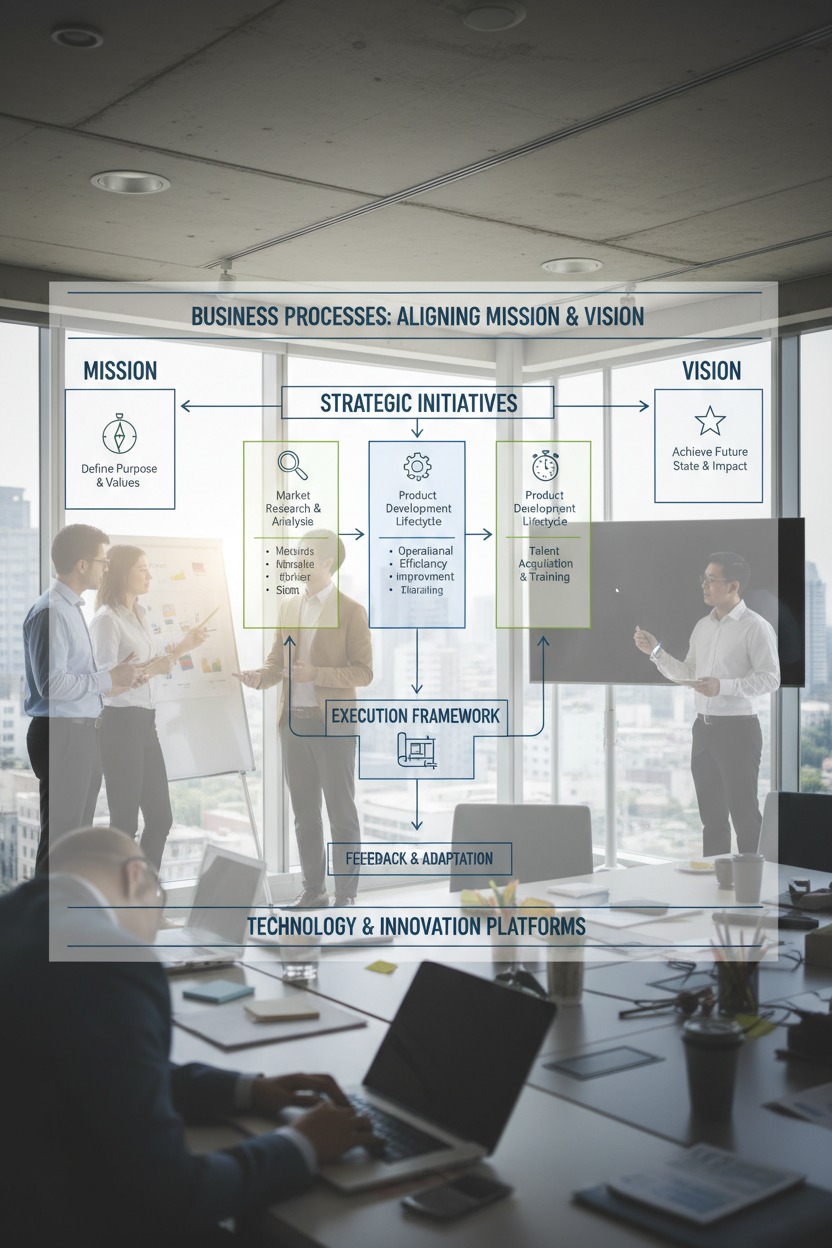
A recurring challenge in many organizations is the assumption that IT owns the applications that support business processes. In reality, IT owns technology platforms. The business owns the processes.
An ERP system is not critical because of its technical architecture. It is critical because it supports finance, procurement, manufacturing, or customer operations. A CRM platform is not important because it runs in the cloud. It is important because it enables revenue generation and customer engagement.
The technology itself has no value without the business process it supports. Therefore, determining what is critical, what level of disruption is acceptable, and what recovery objectives are required cannot be delegated to IT.
These decisions require business ownership.
Start with Business Impact Assessments
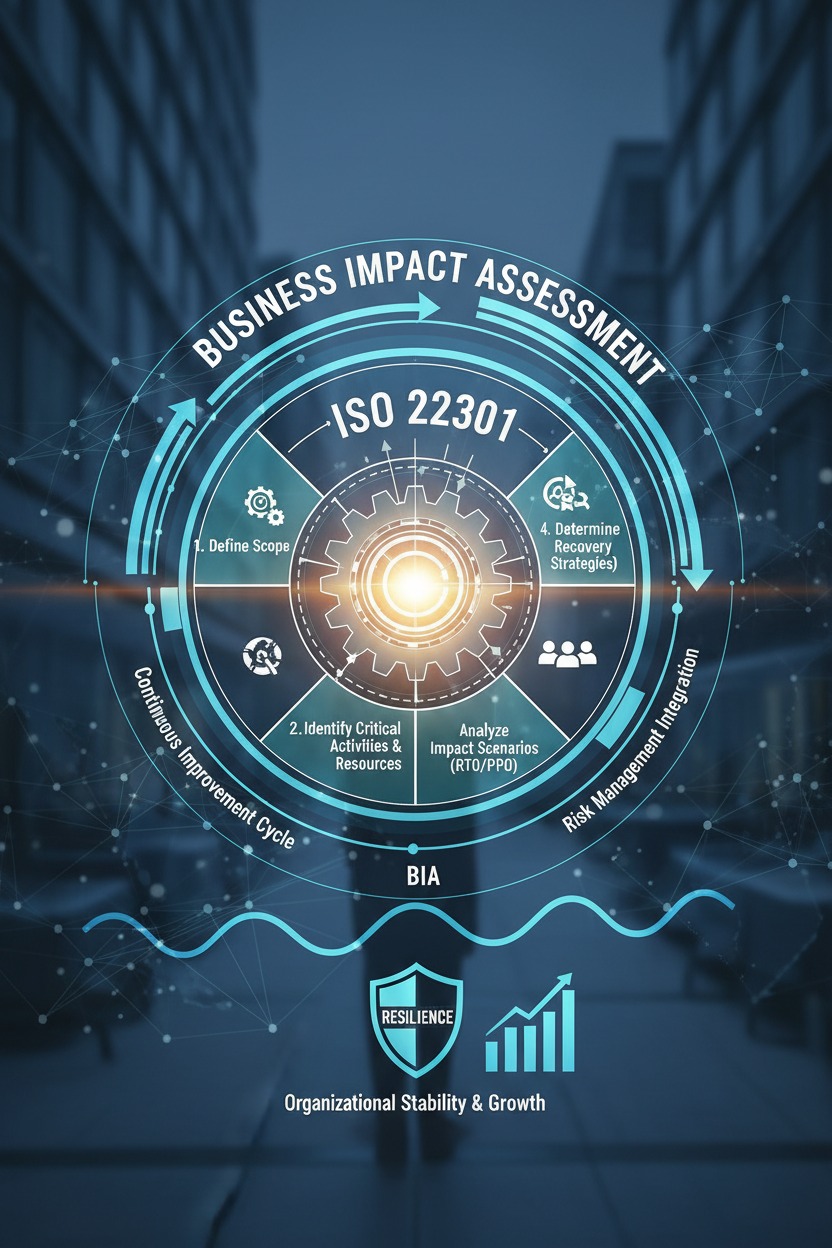
The foundation of resilience is understanding what matters most. Organizations should begin by identifying their critical business processes and conducting Business Impact Assessments (BIAs).
The purpose is straightforward:
- Identify critical business processes.
- Understand dependencies.
- Determine acceptable downtime.
- Quantify operational, financial, regulatory, and reputational consequences.
- Establish recovery requirements.
Only when the business understands the impact of disruption can meaningful resilience objectives be defined. Without this understanding, resilience investments become little more than educated guesses.
Risk Management Extends Beyond Technology
Once critical processes have been identified, organizations must examine everything that could cause those processes to fail.
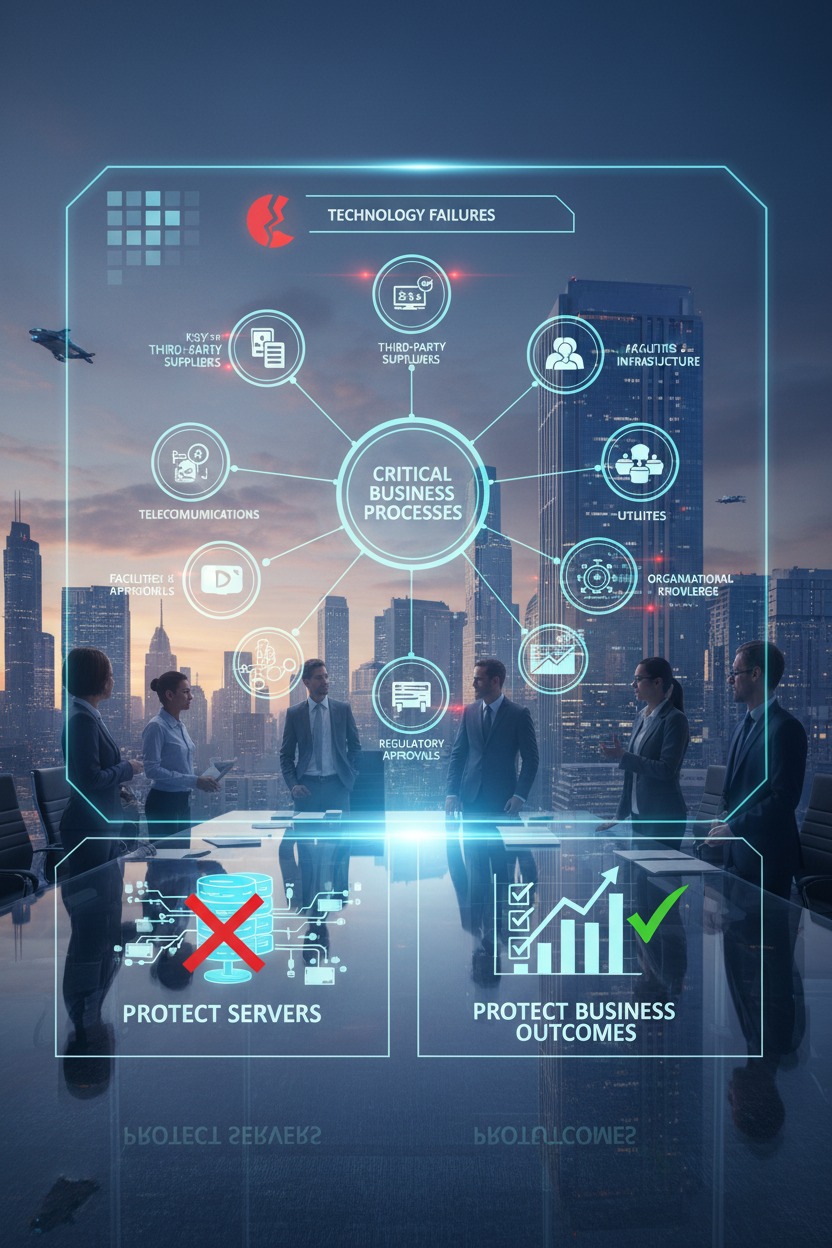
Technology failures are only one category of risk.
A process may depend on:
- Key personnel
- Third-party suppliers
- Facilities and physical infrastructure
- Telecommunications
- Utilities
- Regulatory approvals
- Data quality
- Organizational knowledge
Every dependency represents potential risk. This is why resilience must be viewed through a business lens rather than a technical one. The objective is not to protect servers. The objective is to protect business outcomes.
Where IT Security Comes In & The Future of Resilience
Some security professionals may read this and wonder whether their role is being diminished. The opposite is true. The role of IT and security has never been more important.
But the role is changing.
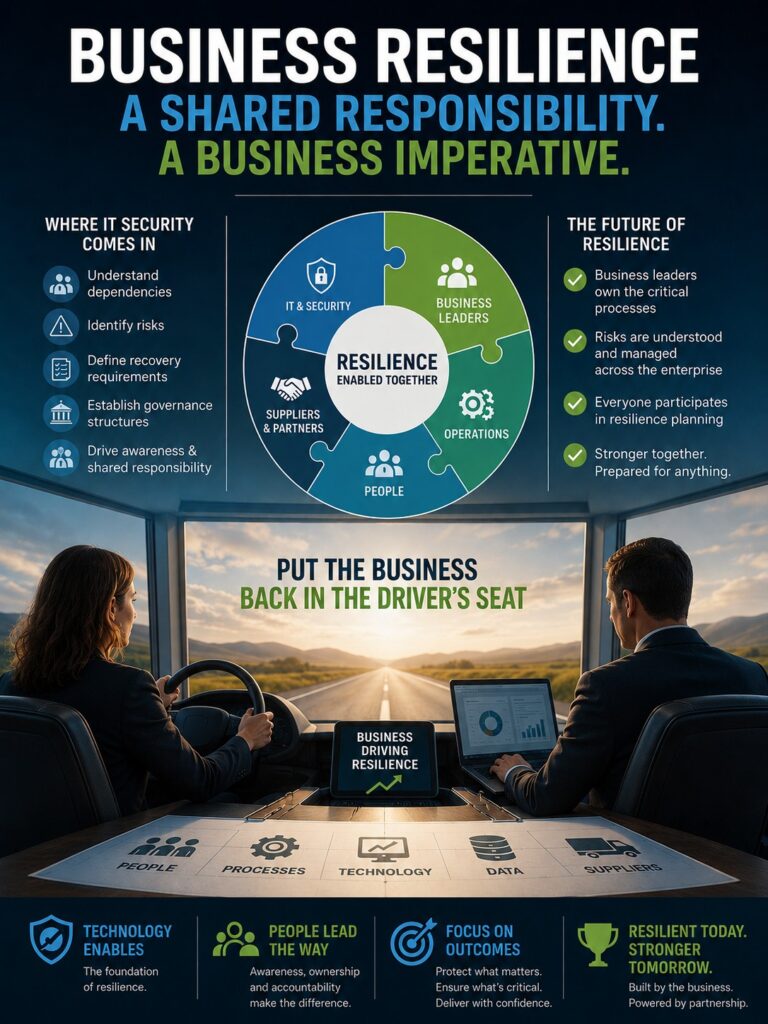
Security leaders must become facilitators of resilience rather than sole owners of it. They must help the business understand its dependencies, identify risks, define recovery requirements, and establish governance structures. Most importantly, they must drive organizational awareness that resilience is a shared responsibility.
This is fundamentally a change management challenge. The technology is often the easy part. Changing behaviors, clarifying ownership, and embedding accountability across the organization is significantly harder.
The organizations that will succeed in the coming years will not necessarily be those with the largest security budgets or the most advanced technology stacks. They will be the organizations where business leaders understand their critical processes, own their risks, and actively participate in resilience planning.
IT and security teams remain essential partners. But they should not be carrying responsibilities that belong to the business. Business resilience begins with business ownership.
It’s time to put the business back in the driver’s seat!